When you purchase through links on our site , we may earn an affiliate delegacy . Here ’s how it works .
A Modern reactor could turn wastewater into drinking water — while also generating one of the human beings ’s most seek - after chemicals .
The young reactor , described Aug. 12 in the journalNature Catalysis , produces ammonia gas from water contaminate with nitrate ions .
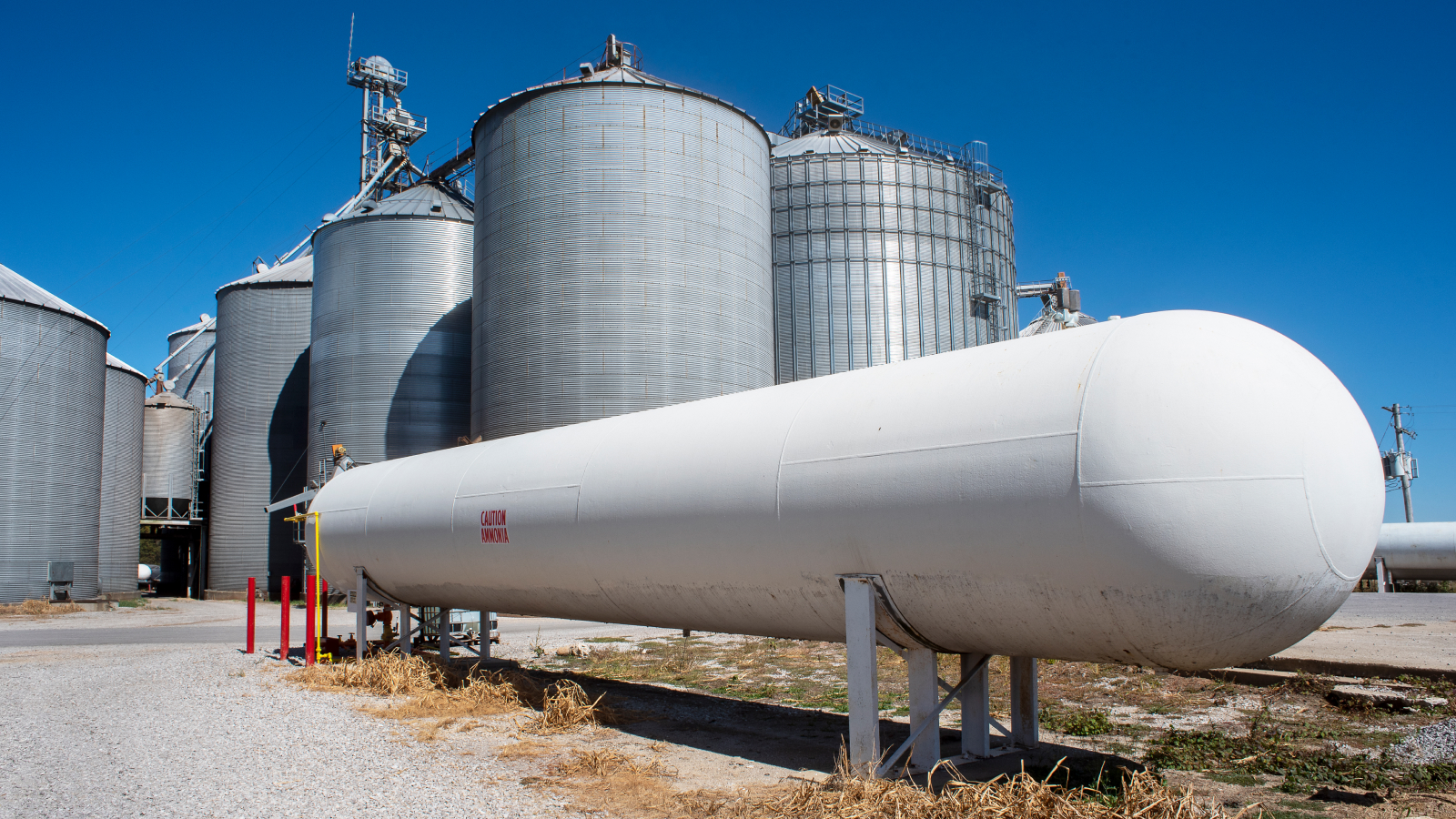
A storage tank holding ammonia. Ammonia is one of the most valuable chemicals, but producing it is incredibly energy-intensive. A new reactor (not shown here) makes the process much more efficient.
Ammonia ( NH3 ) is an extremely important industrial chemical substance . It is one of the primal components in fertilizers and also lively in chemical substance manufacturing processes . Over 180 million tons ( 163 million measured tons ) are produced annually , mostly by the 100 - year - old Haber - Bosch process , a high temperature - high pressure chemical reaction between hydrogen and N . This one chemical reaction alone use approximately 2 % of the world ’s energy , harmonise to the study .
Nitrate , on the other paw , pollutes rivers and stream when excess runoff from fertilized farmland go in local waterways . nitrate devastate aquatic ecosystems , and at high levels in imbibition water supply canpose wellness endangerment . To be safe to drink , water system must be thoroughly do by to take away nitrates .
exist commercial discourse use bacterium to convince nitrate ion directly to nitrogen , but this procedure is expensive and also bring forth nitrous oxide , which , pound for pound , is265 times more potent as a greenhouse gasthan carbon dioxide .

Feng-Yang Chen with the reactor system prototype that dramatically increases the efficiency of ammonia production using electricity.
To fend off this climate impact , scientist are working on way of life to convert nitrate into ammonia using electrical energy , but early systems have struggle with undesirable side reactions .
In these gimmick , there is a positive and minus end , with a difference of opinion in charge between the two . Chemical response occur at both . Water is split into atomic number 8 gas and hydrogen ion at the negative end of the reactor , while a second response converts nitrates to ammonia and hydroxyl ions ( OH- ) at the positive remnant .
regrettably , atomic number 1 ion produced on one side tend to diffuse to the other , where they chemically react to imprint atomic number 1 . Because even extremely contaminated piddle still has diminutive absorption of nitrate , this hydrogen response winds up dominating and forestall the primary nitrate - to - ammonia chemical reaction from occuring efficiently . Scientists have seek to get around this by putting additives into the mix , but this is impractical for real - globe diligence in water treatment .

The new reactor produces ammonia gas from water contaminated with nitrate ions. Here, a scientist tweaks the reactor prototype.
In the new subject area , the researchers got around this problem in part by add an intermediate chamber , create a three - chamber reactor , study first authorFeng - Yang Chen , a research worker at Rice University in Texas , told Live Science in an email . In the first chamber , nitrate is converted into ammonia gasolene and hydroxyl ions . These commingle with sodium ion already present in the water to organize sodium hydroxide . As the cleaned water leaves the first chamber and is pumped into the middle bedchamber with this atomic number 11 hydroxide , the newly - constitute ammonia gas is bubble out . Meanwhile , in the third chamber , hydrogen ions produce by the splitting of water system diffuse across the cellular phone into the middle sleeping accommodation . Here , H and hydroxyl ions from the Na hydroxide combine to mould water supply . The leftover sodium ions then move back from the middle bedroom into the first chamber to repeat the round .
— Secrets of radioactive ' promethium ' — a rarefied earth element with mysterious applications — uncovered after 80 - twelvemonth hunt — scientist grow diamonds from scratch in 15 minutes thanks to groundbreaking newfangled process — Formosan scientists have recover a way to make batteries more effective — by using water
Crucially , no hydrogen ion reach the other side of the reactor to interfere with the nitrate response . In a 10 - day psychometric test run , over 90 % of the electric electric current in the inquiry team ’s cellular phone powered ammonia product , compared with around 20 % for former scheme .

Wang ’s design is still data-based and they still need to work out out several issues before the engineering science can be roll out commercially .
One of the big challenges is insure the chemical reaction can still carry on in the mien of dross , such as atomic number 12 and calcium ions , that are often find in water , Chen enjoin .